
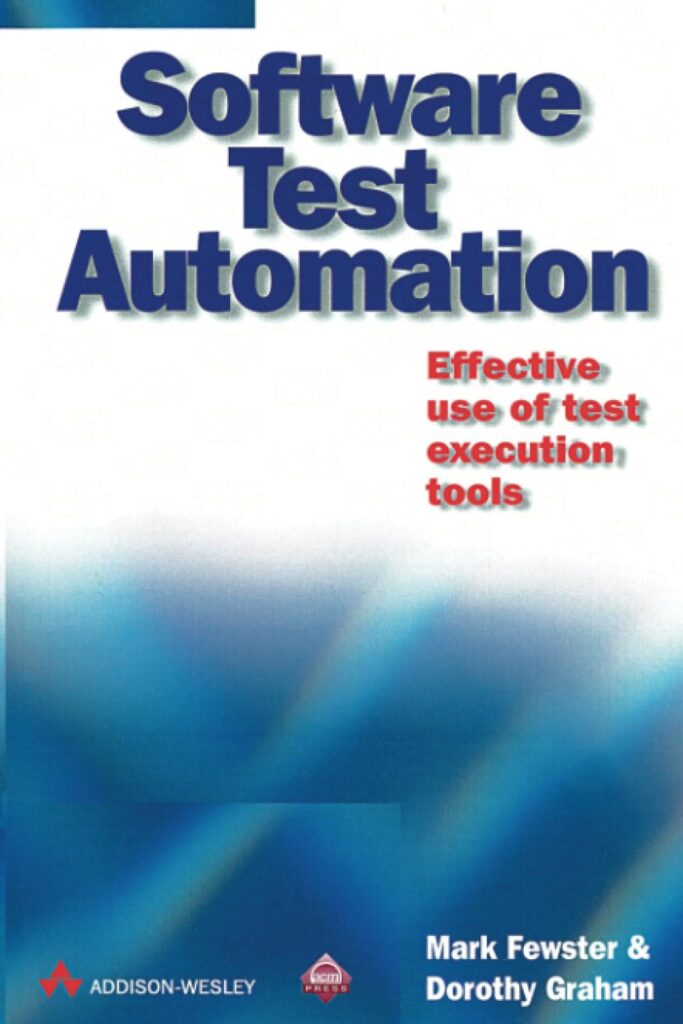

📝 Software Test Automation — The Classic Blueprint for Sustainable Automation
🔍 Introduction
Software Test Automation by Mark Fewster and Dorothy Graham is one of the first books that treated automation not as a coding problem, but as a strategic initiative.
Even though it was published in 1999, the principles it teaches — sustainability, maintainability, structure — are still crucial (and often ignored) today.
This book isn’t about the latest tools. It’s about making automation projects actually succeed — and avoid becoming a costly mess.
📚 What You’ll Learn
- How to evaluate if automation is the right choice — and where to start
- The Test Automation Lifecycle Methodology (TALM)
- Key roles in an automation project and what each contributes
- Techniques for building modular, reusable automation
- Common reasons automation fails — and how to avoid them
✅ Who Should Read This
- QA engineers starting large-scale automation efforts
- Test managers creating an automation strategy
- Dev teams thinking about shifting left
- Anyone tired of “write once, rewrite forever” automation
- Candidates for ISTQB Advanced Test Automation Engineer
💡 My Top 3 Takeaways
- Successful automation is 80% planning, 20% tooling.
- Reusability and separation of concerns aren’t just developer things — they apply to testing too.
- The best automation starts by thinking like a test architect, not just a scripter.
📦 Where to Buy
📘 Software Test Automation on Amazon
This is an affiliate link — by purchasing through it, you help fund quality-driven QA content 🙏


