
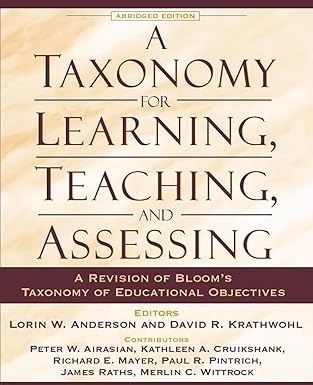

📝 Bloom’s Taxonomy for Testers — Designing Better Tests, Trainings, and Thinking
🔍 Introduction
While A Taxonomy for Learning, Teaching, and Assessing isn’t a software testing book per se, it’s incredibly useful for QA professionals, test analysts, trainers, and ISTQB students who design tests — of systems and knowledge.
This revision of Bloom’s Taxonomy helps clarify different levels of cognitive learning — from remembering facts to evaluating abstract systems.
If you’ve ever struggled to write test objectives, learning goals, or even test questions, this book will sharpen your skills.
📚 What You’ll Learn
- The six levels of cognitive processes: Remember, Understand, Apply, Analyze, Evaluate, Create
- How to structure assessments or interviews based on mental complexity
- Examples of measurable learning objectives — ideal for training QA teams
- Insights into how testers (and users) process, retain, and use information
- A framework you can use to write better test cases and learning materials
✅ Who Should Read This
- QA trainers, mentors, and team leads
- Test analysts preparing exam-style assessments or training sessions
- ISTQB coaches or content creators
- Anyone designing onboarding programs or internal QA workshops
💡 My Top 3 Takeaways
- Not all testing is created equal — use cognitive levels to define test depth.
- You can use Bloom’s Taxonomy to evaluate tests themselves, not just learners.
- High-quality test design isn’t just technical — it’s pedagogical too.
📦 Where to Buy
📘 A Taxonomy for Learning, Teaching, and Assessing on Amazon
Affiliate link — supporting this blog means supporting education-minded QA 🚀


