
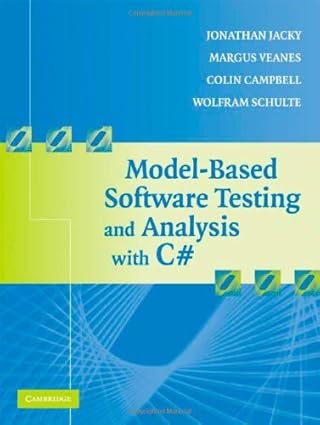

📝 Model-Based Testing with C# — Automating Tests from Behavior Models
🔍 Introduction
Model-Based Software Testing and Analysis with C# shows how to generate powerful, automated test cases directly from system models — using a practical, code-driven approach for .NET teams.
Written by Jonathan Jacky and Nikolai Tillmann, the book combines formal modeling with real-world C# examples to bridge the gap between design and executable tests. It’s a hands-on guide for testers and developers seeking early, repeatable, and high-coverage testing for complex systems.
If you’re interested in automated test generation, state modeling, or design validation, this book delivers a solid foundation.
📚 What You’ll Learn
- How to create and use finite state models to represent software behavior
- Techniques for generating test cases automatically from models
- Practical use of C# and Spec Explorer, a tool developed at Microsoft Research
- How to combine model analysis and test execution for robust coverage
- Real-world applications in protocol testing, UI testing, and state-based systems
✅ Who Should Read This
- Test automation engineers and SDETs working in the .NET ecosystem
- Developers and testers interested in formal methods or model-based test generation
- QA professionals building state-driven or behavior-driven test frameworks
- Teams in regulated, embedded, or safety-critical domains seeking precise test coverage
💡 My Top 3 Takeaways
- Good models reduce test redundancy and increase behavior coverage.
- Tools like Spec Explorer let you generate tests from behavior, not guesses.
- Model-based testing improves traceability, early defect discovery, and repeatability.
📦 Where to Buy
📘 Model-Based Software Testing and Analysis with C# on Amazon
Affiliate link — using it helps support this blog and fund more content on test automation and design modeling 💻


